
The UK won’t grow until we stop squeezing its smallest businesses
20 February 2026
Share:
I went looking for good news from the business world this week. It didn’t take long to see why many small business owners feel a familiar knot forming in their stomachs.
The cost of hiring graduates and young people has jumped again. That may not surprise anyone who has looked at recent changes to national insurance contributions. When the cost of employment rises, hiring slows. When hiring slows, unemployment ticks up. This is not complicated economics; it is arithmetic.
Further down the page came the mood music. Business optimism at the start of the year is fading. Fewer people now expect the economy to improve over the next twelve months, while around half of voters expect things to get worse. Confidence, once lost, is hard to rebuild, and small firms feel that loss first.
Then there were the growth figures. China is growing at around five per cent. The United States at over four. The UK is forecast to manage roughly 1.4 per cent. If anyone is wondering why there is such a wide gap, it may help to look not at global shocks or abstract theories, but at how we treat the businesses that actually generate growth at home.
There are around 5.6 million businesses in the UK employing between zero and fifty people. That is 99.2 per cent of all businesses. Together they employ around half of the private sector workforce and generate close to £2 trillion in turnover. They are responsible for roughly half of economic growth and around three quarters of business innovation.
On the face of it, that should put small and micro businesses at the centre of economic policy. In practice, they are still treated as an afterthought.
Our economic model is often imagined as a pyramid. At the top sit the largest firms – roughly 8,000 of them. Beneath them come around 38,000 medium-sized businesses. At the bottom, supporting everything above, sit the remaining 99.2 per cent. Policy attention, incentives and patience tend to flow downwards from the top, even though the base carries the weight.
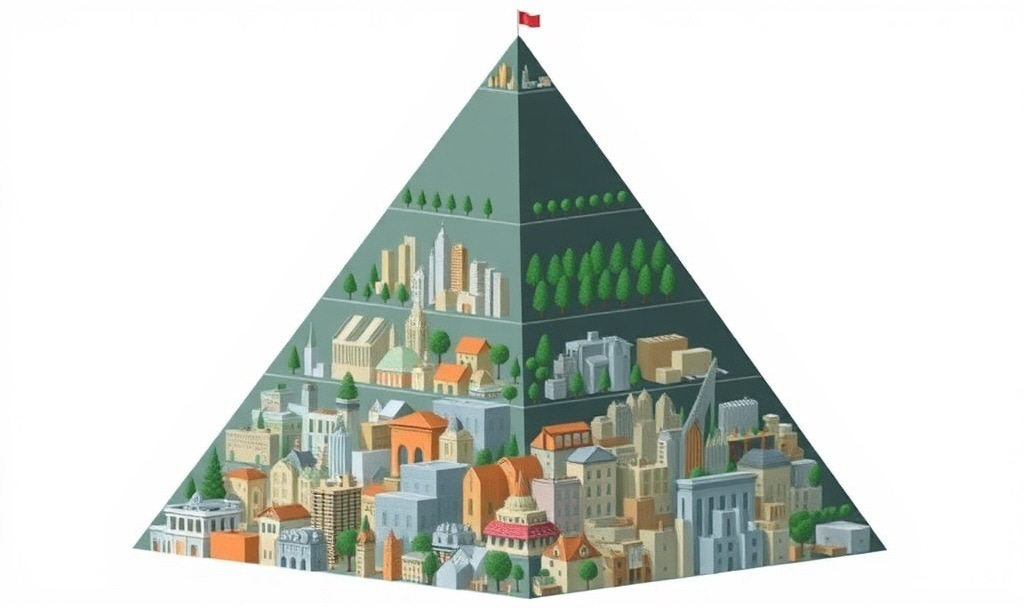
Our economic model is often imagined as a pyramid. At the top sit the largest firms – roughly 8,000 of them. Beneath them come around 38,000 medium-sized businesses. At the bottom, supporting everything above, sit the remaining 99.2 per cent. Policy attention, incentives and patience tend to flow downwards from the top, even though the base carries the weight.
That logic is back to front. If the foundations are weak, the structure above cannot hold. If we want growth, resilience and innovation, we have to start where most businesses actually are, not where we wish they were.
Small businesses are agile, adaptable and willing to take risks. They respond quickly to local demand, they innovate out of necessity, and they create jobs in places large employers rarely reach. What they lack is not ambition or effort, but consistent, stage-appropriate support that recognises how fragile the early years of growth can be.
Turning the pyramid upside down does not mean abandoning big business or medium-sized firms. It means recognising that the health of the economy depends on the strength of its smallest enterprises. Give them clarity, affordable finance, proportionate regulation and the confidence that policy is designed with them in mind, and they will do what they have always done.
The UK was built on small businesses. The technologies may have changed, but the mindset has not. If we are serious about growth, we need to start thinking small again – and let the economy grow from there.
Share: