
Work longer, save more? Pension change puts freelancers on notice
12 October 2026
·
Liz Barclay
Share:
Triple lock shake-up could hit Britain's self-employed hardest
The State Pension triple lock is heading for a major shake-up from 2030, and for Britain's older entrepreneurs, freelancers and sole traders this isn't simply a pensions story. Many self-employed people reach retirement without the employer pension contributions enjoyed by employees, making the State Pension an especially important foundation for later life. Change the way that foundation grows and the consequences could reach from retirement planning to how long people keep their businesses running.
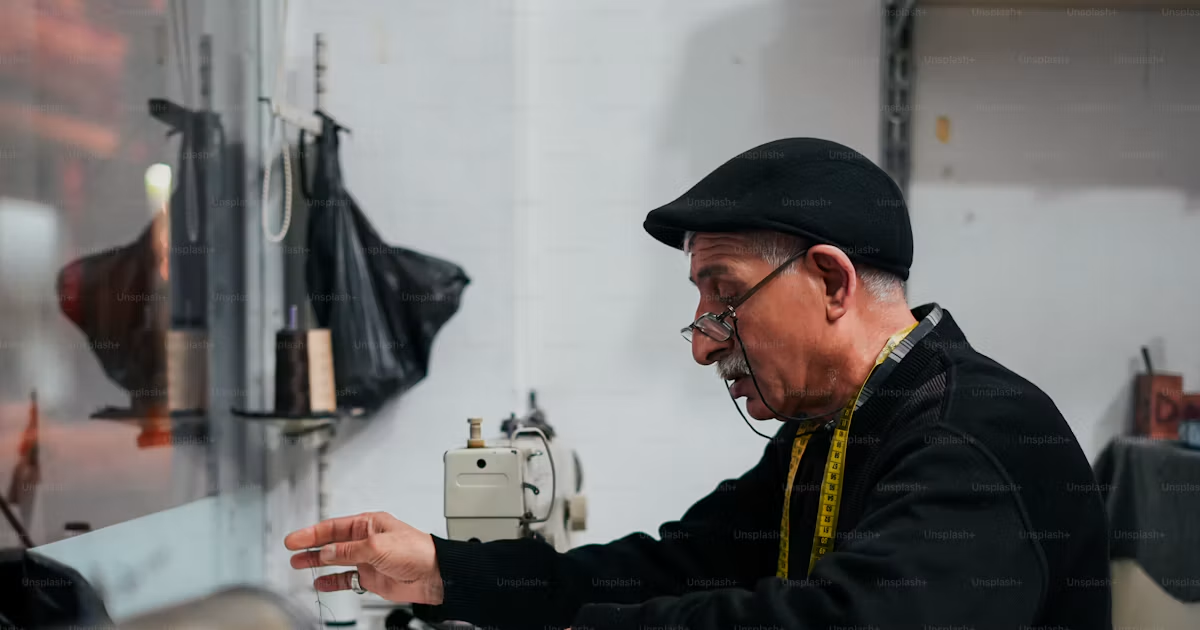 Credit: Photo by Yunus Tuğ on Unsplash
WHAT THE TRIPLE LOCK ADJUSTMENT MEANS FOR OLDER ENTREPRENEURS, SOLE TRADERS & FREELANCERS
The triple lock means the State Pension rises in April each year for those over the state pension age (retired or not) by the highest of average earnings, inflation (as measured in Sept), or 2.5%. What the announcement by the Prime Minister in his first Labour Party conference speech as Prime Minister seems to mean is that from 2030 (if the party gets back into power) the state pension will go on rising by 2.5% or by the rate of inflation if that’s higher (so from 2030 onwards the state pension would at least hold its 2030 value). Until we know the details, possibly with more information to come in the budget in October, that’s about all we can say, except that this matters hugely to sole-traders and freelancers.
The State Pension is now £241.30 per week (£12,548 a year) in 2026/27, and any change to the way it is uprated in future has direct consequences for older self‑employed people who rely on it as the foundation of their retirement income, making it a workforce and small‑business issue as well as a pensions one.
The triple lock is a promise
It was introduced 16 years ago, to stop pensioners falling into poverty after decades of the State Pension losing value in real terms. The 2.5% lowest option for uprating the pension hs only been used once in the last 10 years and the triple lock is seen as:
a guarantee of dignity in old age
a symbol of political commitment and
a protection against future governments cutting pensions
Removing it feels like breaking a promise, especially to older voters who rely on it.
Millions of people rely on the State Pension as their main income
The State Pension is not a “top‑up” for most retirees. It is the core income for:
low‑income workers
people with interrupted work histories
carers
disabled people
self‑employed pensioners and
women who faced historic pension inequality.
Even small changes in uprating could have significant consequences for these groups.
Self‑employed people are exposed
Older entrepreneurs, sole traders and freelancers often have no employer pension contributions or private pensions, irregular saving patterns, gaps in National Insurance records and businesses that can’t be sold for retirement income.
For them, the State Pension is the foundation of retirement security. Adjusting the triple lock in such a way as to reduce that foundation could hit this group harder than almost any other.
Older entrepreneurs could be forced to work longer
The triple lock has dramatically increased the State Pension over the last 15 years, from just over £100/week in 2011 to £241/week in 2026. If future increases are smaller that’s likely to mean more older entrepreneurs staying in business into their late 60s and 70s with fewer planned retirements, more returning to work after retiring and greater reliance on part‑time self‑employment to top up income.
For sole traders and freelancers, this means longer working lives and greater pressure to keep earning. The knock-on impact in a business environment where there are fewer job vacancies, is that it makes it even harder for young people without experience to get into work.
Self‑employed people could face higher financial insecurity in later life
Unlike employees, most self‑employed people have no employer pension contributions and have irregular income. They often under‑save for retirement because they’re pumping money into their businesses and they rely heavily on the State Pension as a baseline.
If future State Pension increases stick at the 2.5% level instead of the higher average earnings figure this means lower real‑terms income in retirement, more pressure to keep businesses running longer and increased risk of poverty in old age for low‑earning sole traders and freelancers.
The macro‑impact
Adjusting the way state pension increases are calculated could have an impact on the UK entrepreneurs with:
fewer older founders retiring
more “semi‑retired” entrepreneurs
slower succession planning
more micro‑businesses run by people aged 65–75 and
increased demand for part‑time flexible work.
The Double Lock
The triple lock becomes a two factor lock and will save the government money, but any adjustment that gives older entrepreneurs, sole traders and freelancers smaller annual state pensions increases could be difficult for them. They rely more heavily on the State Pension and have fewer alternative retirement savings that their counterparts retiring from employment.
Share: